Local manuscript clarity and plain-English clause review.
Inspect dense contracts, verify citations deterministically, and edit drafts locally on macOS without uploading confidential agreements to third-party servers. Informational software only—not legal advice.
Risk: Transfers ownership of your reusable starter libraries.
Sample Balanced Alternative: Assigns custom deliverables upon payment while retaining pre-existing tools.
Risk: Unlimited personal financial exposure for indirect claims.
Sample Balanced Alternative: Mutual indemnity capped at fees paid in the prior 3 months.
Contract Clause Scanner
Flag unilateral indemnity, AI training rights, auto-renewal traps, and asymmetric liability caps locally in your browser.
DOI / ISBN / ORCID Verifier
Catch fabricated academic citations via deterministic format and checksum validation before peer review or publication.
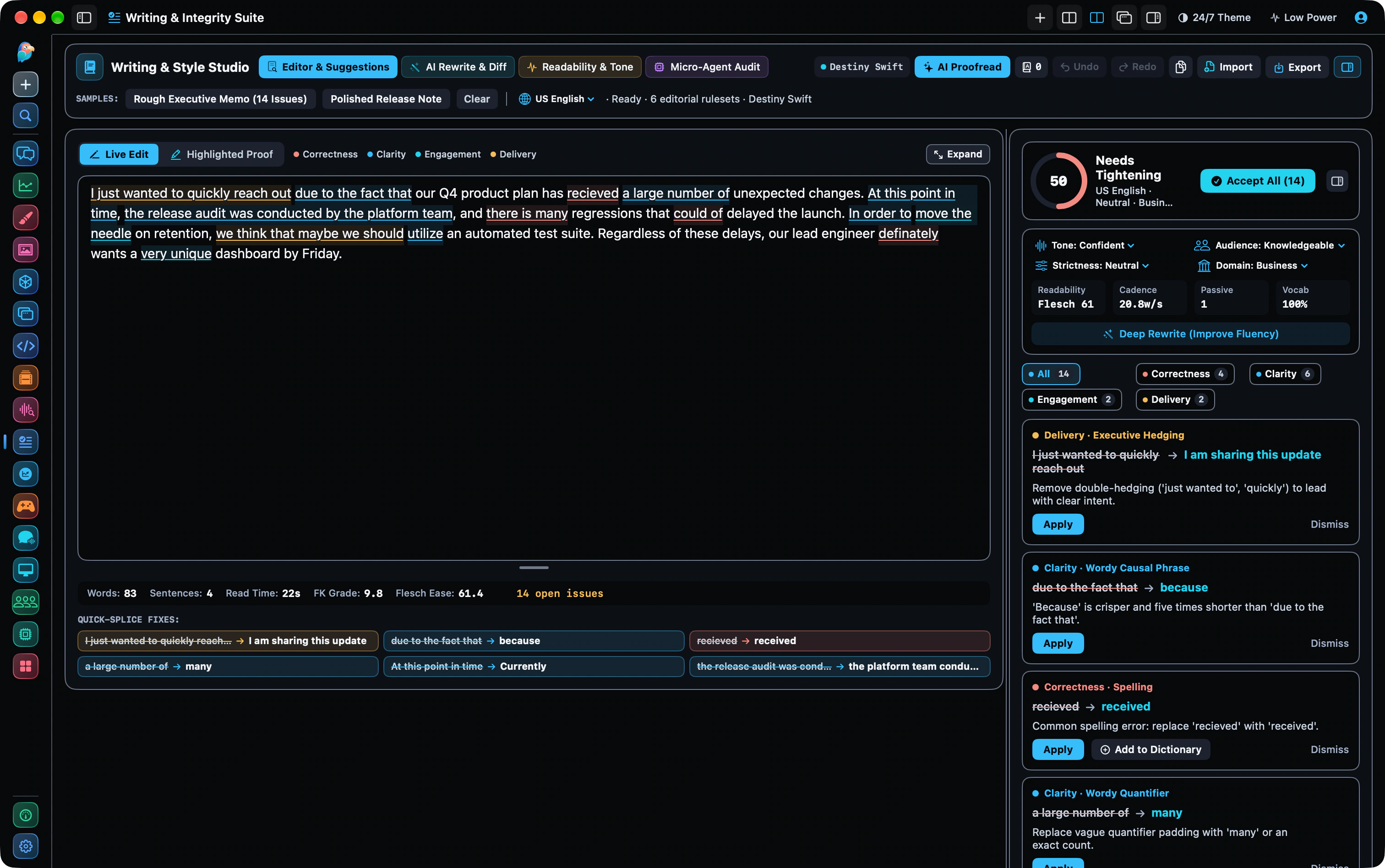
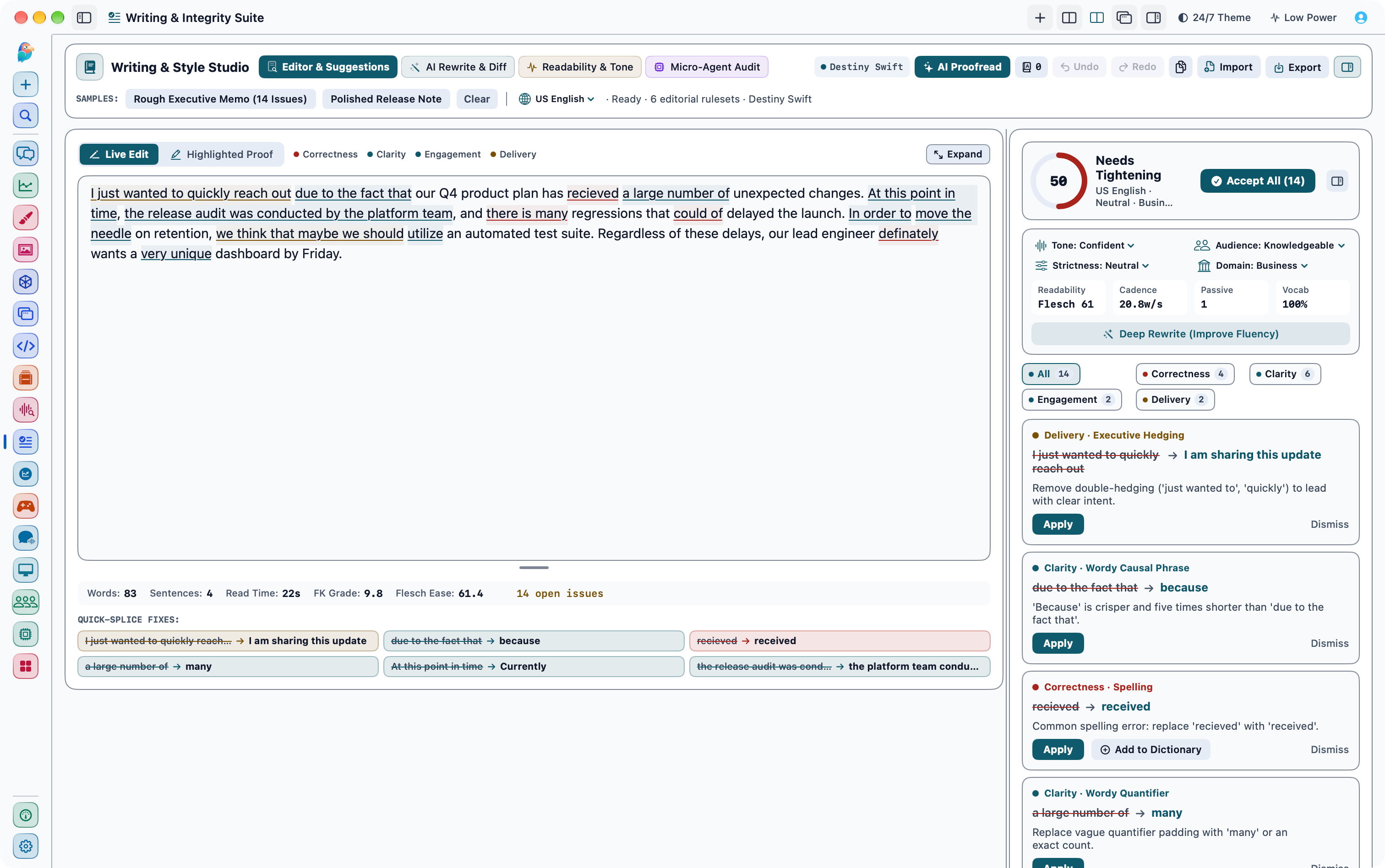
Thesis Clarity Coach
Audit sentence cadence, claim evidence density, and passive drift locally without exposing unpublished drafts.
Academic Originality Fingerprinter
Transparent structural overlap comparison built to avoid opaque AI-detector false positives against ESL writers.
Direct capture of Contract & Document IQ.
Writing & Legal Clarity FAQ
- Does Destiny Contract & Document IQ upload confidential drafts to external servers?
- No. Document clarity, citation checksum verification, and informational clause scanning execute locally on your device. Even the free browser tools at /tools/contract-clause-scanner, /tools/citation-verifier, and /tools/thesis-clarity-coach run 100% in client-side JavaScript with zero file upload.
- Does Destiny provide legal advice or replace licensed counsel?
- No. Clause highlights and plain-English comparisons are strictly informational review aids to help you prepare questions for qualified legal counsel.
- How does Destiny verify academic citations and prevent ESL false positives?
- Destiny checks real structural formats and mathematical checksums (ISO 26324 DOI syntax, GS1 ISBN-10/ISBN-13 check digits, ORCID mod 11-2) and uses transparent Winnowing k-gram fingerprinting rather than opaque AI-detector scores. Read our full technical guides under /guides.