48 kHz multitrack audio mastering and local timeline editing.
Synthesize 64-frame wavetables, inspect 128-bin FFT spectra, sculpt 4-band parametric EQ, and cut timelines directly on Apple Silicon Unified Memory inside Destiny by Nandai Jewels.
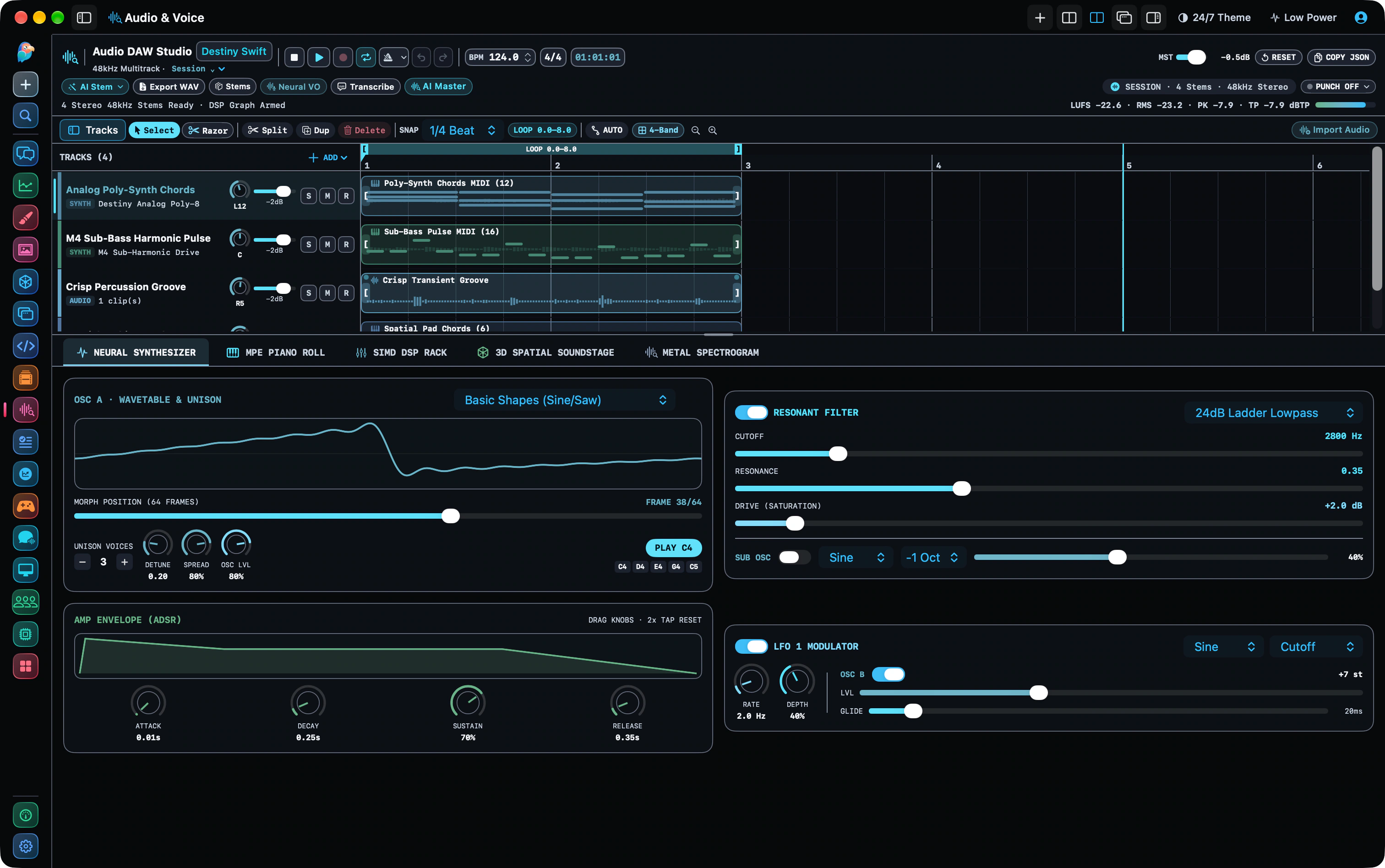
48 kHz Multitrack Audio Engine
Stereo 48 kHz stem synthesis and playback with deterministic ADSR envelopes, unison detune, and direct WAV export to local disk.
128-Bin FFT & Parametric EQ
Inspect real-time 128-bin spectral balance, 4-band parametric EQ, and integrated LUFS loudness targets without external plug-in wrappers.
Local Unified-Memory Timeline
Assemble cuts, synchronize stems, and export rendered deliverables locally on Apple Silicon without cloud render queues.
Cryptographic Media Provenance
Inspect JUMBF content credentials and verify binary metadata locally before publishing audio or video masters.
Governed 60fps Spatial Audio DAW capture & light polarity plate.
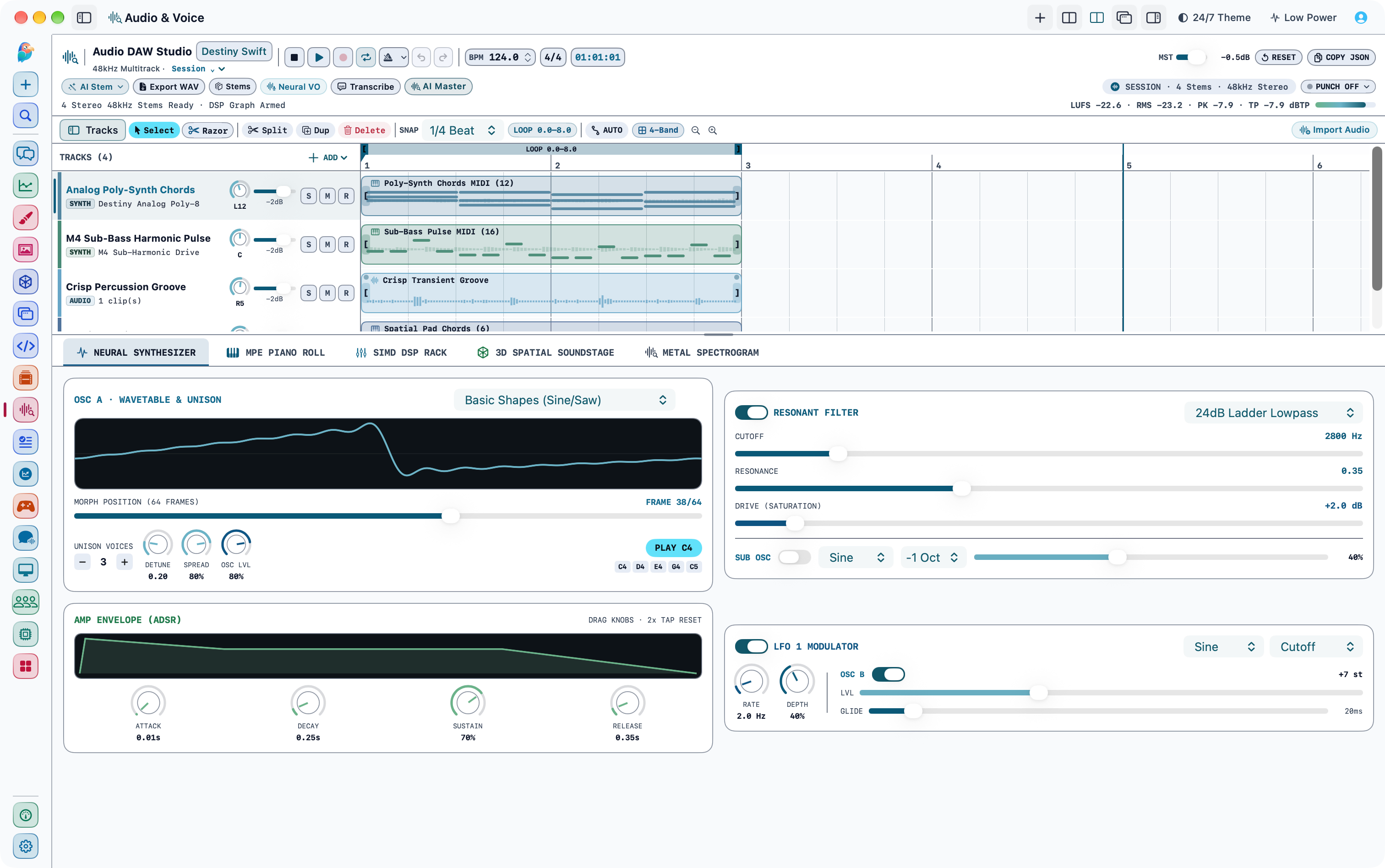
Inspect waveforms, ladder filter cutoff resonance, and stereo LUFS meters cleanly in daylight drafting studios or low-light mastering rooms.
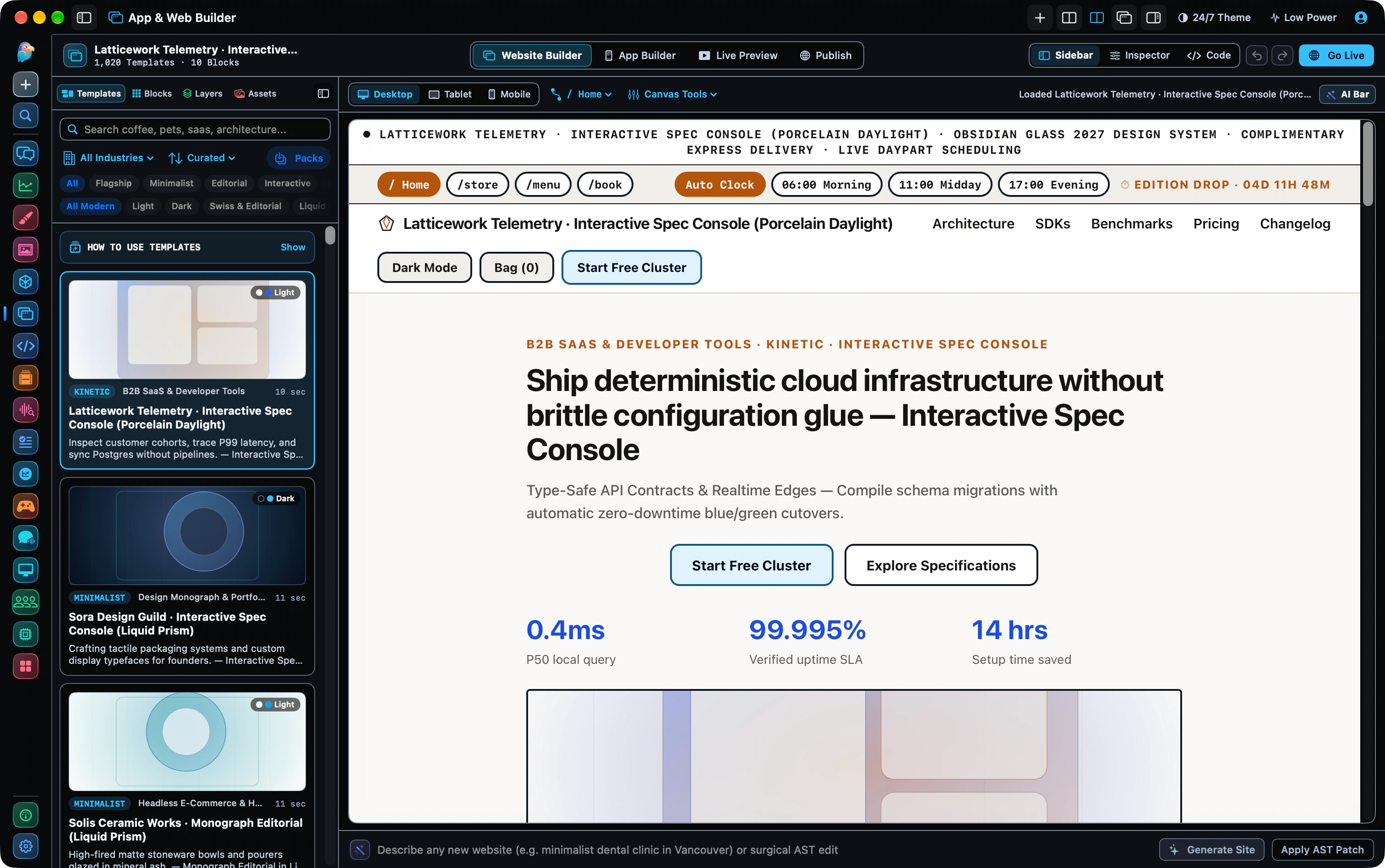
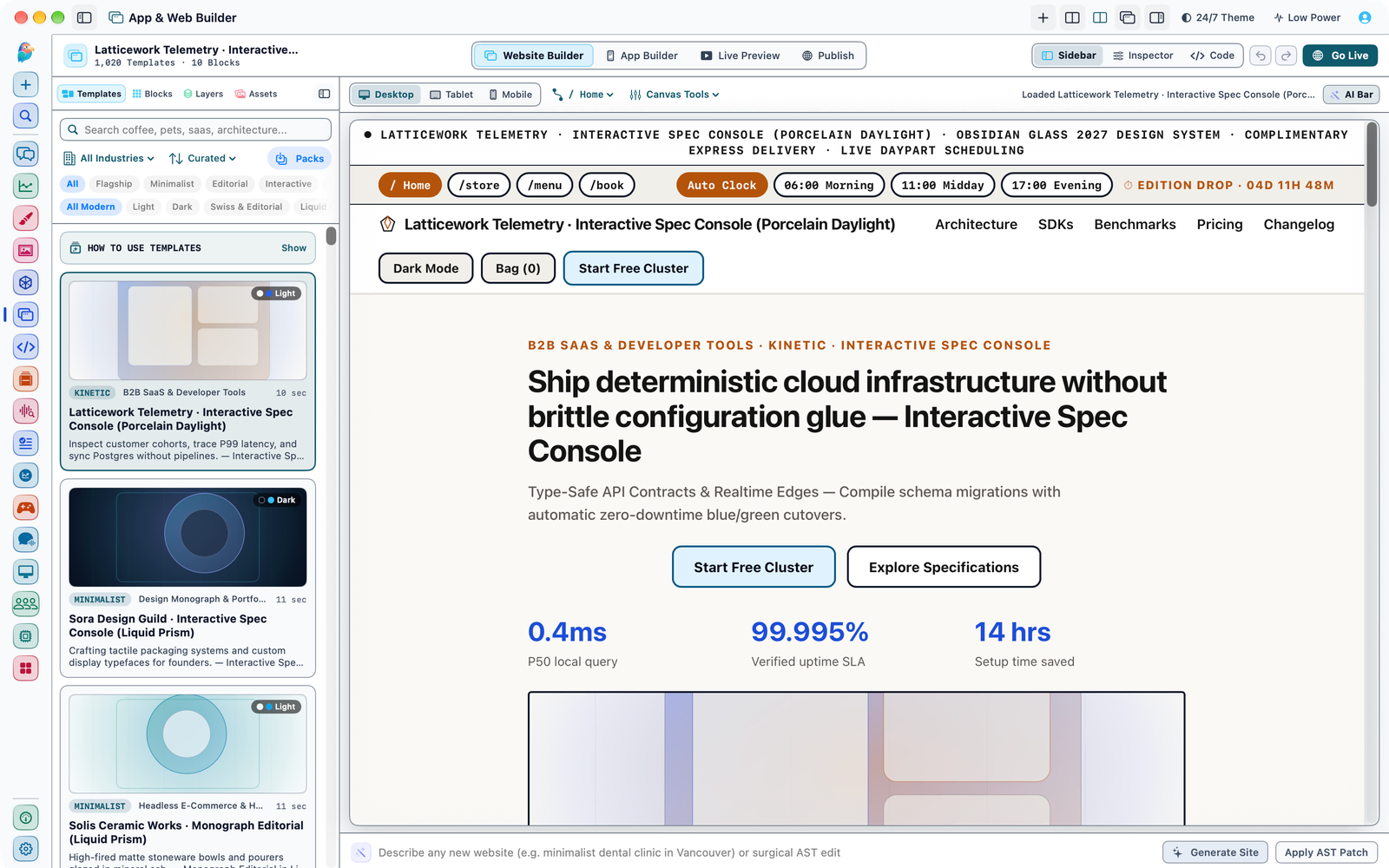
Real native macOS Studio captures comparing Draft Light and Instrument Dark node inspection workspaces. Note: Live optical image synthesis runs natively inside Destiny macOS (FLUX.2-klein-4B / Metal 4) rather than as a simulated canvas un-blur in the browser.
Audio & Cinema Studio FAQ
- What audio engine powers Destiny Audio DAW on macOS?
- Destiny Audio DAW uses Apple Accelerate vDSP for 48 kHz multitrack playback, 64-frame wavetable synthesis, 4-band parametric EQ, and real-time 128-bin FFT spectral metering with stereo WAV export.
- Are the media demonstrations on nandai.org unedited native captures?
- Yes. We removed synthetic AI cartoon reels, stock lifestyle footage, and native browser video-control overlays in favor of direct borderless Retina screenshots and lightweight governed captures of the actual Destiny macOS interface.
- How does Destiny handle content provenance and binary metadata inspection?
- Use our free zero-upload C2PA & Watermark Inspector at /tools/watermark-inspector to parse JUMBF/C2PA boxes, PNG chunks, and EXIF metadata directly in client-side JavaScript.